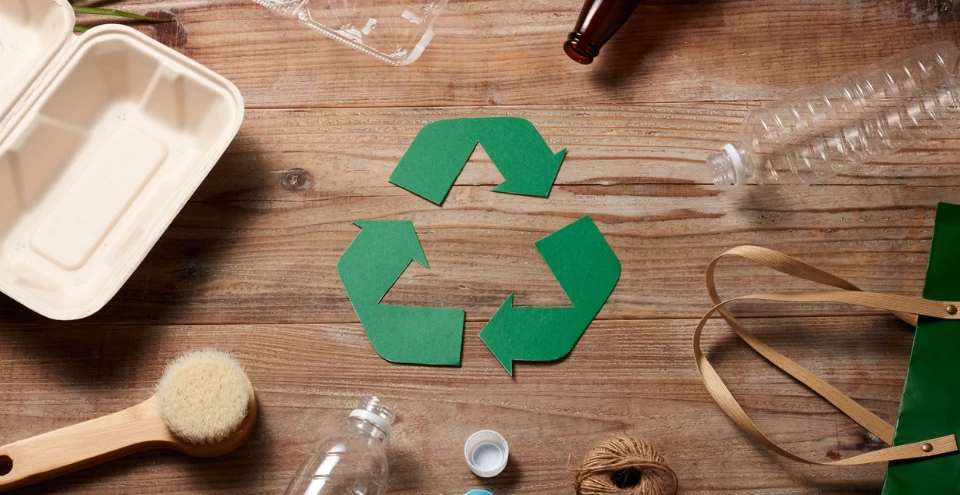
By 2026, the focus of Plastic ESG in the plastics industry will shift from simple plastic reduction to a true circular economy. With the official implementation of the EU Packaging and Packaging Waste Regulation (PPWR), plastic packaging entering the European market must meet strict recyclability requirements and include a defined proportion of post-consumer recycled (PCR) material. Through high-efficiency washing lines and energy-saving recycling systems, Geording supports manufacturers in building compliant PCR Plastic Recycling processes, reducing carbon emissions, and meeting ISO 14064 carbon accounting requirements.
Key Global Plastic ESG Trends in 2026: No Longer a Choice, but a Matter of Survival
As the industry enters 2026, competitiveness in the plastics sector is now closely tied to Plastic ESG performance. Three major trends are redefining the future of the industry:
- EU PPWR Regulations: Starting in August 2026, all packaging placed on the EU market must comply with PFAS restrictions and recyclability standards, with a target of achieving 35% recycled content by 2030. This places direct pressure on the quality and traceability of Post-Consumer Plastic Recycling streams.
- Carbon Footprint Tracking (Scope 1–3): Brand owners such as IKEA and Unilever are requiring suppliers to provide transparent data on equipment energy efficiency and recycled material ratios, making PCR Plastic Recycling performance a measurable procurement criterion.
- Maturation of the Secondary Raw Materials Market: Plastic waste is no longer viewed as a liability, but as a circular asset with measurable economic value—provided that Post-Consumer Plastic Recycling systems can deliver consistent quality.
Which Companies Should Already Be Evaluating Recycling Systems?
In practice, not every company needs to invest in recycling equipment immediately. However, based on Geording’s market observations, the following types of businesses have very limited room to delay:
- Packaging and material manufacturers exporting to the EU: Increasingly required to disclose PCR ratios, material sources, and long-term consistency. Without reliable Post-Consumer Plastic Recycling control, compliance risks continue to rise.
- Recyclers already producing PCR with unstable quality: Recycled materials may be usable, but inconsistent output prevents PCR Plastic Recycling products from passing brand-owner or high-end application validation.
- Manufacturers required to comply with carbon accounting and ESG disclosure: Existing equipment often lacks the energy efficiency and process transparency needed to support Scope 2 and Scope 3 reporting under Plastic ESG frameworks.
- Investors seeking a one-time, integrated recycling solution: Including washing, pelletizing, energy recovery, and overall production line planning for Post-Consumer Plastic Recycling operations.
Once these questions start to arise, the evaluation of recycling systems has effectively already begun—the only difference is whether the decision is formally acknowledged.
Whether ESG Can Truly Be Implemented Depends on Equipment Design Assumptions
Many companies discover after introducing recycling equipment that the challenge is not ESG strategy itself, but the underlying design assumptions of the equipment—especially in PCR Plastic Recycling applications.
- The production line operates, but energy consumption is excessively high
- Washing is possible, but water usage and wastewater pressure increase year by year
- PCR pellets are produced, but quality and odor consistency remain unstable
For this reason, Geording approaches recycling system planning by first addressing several practical questions:
- Can the line operate stably over long periods in Post-Consumer Plastic Recycling environments?
- Will water and energy consumption become future compliance risks under Plastic ESG requirements?
- Can the equipment adapt to regulatory changes after five or ten years?
As a result, Geording treats closed-loop water washing, energy efficiency, and modular upgrade capability as baseline requirements rather than optional features. The goal is not to make the equipment merely appear green, but to ensure long-term compliance with evolving Plastic ESG and PPWR standards.
Driving Environmental Sustainability Through Technological Innovation
Low-Carbon and Energy-Efficient Manufacturing (Environment)
- High-efficiency energy-saving heating systems: Significantly reduce power consumption and help customers lower Scope 2 indirect emissions in PCR Plastic Recycling operations.
- Closed-loop water washing technology: Enables water reuse, reduces wastewater discharge, and improves sustainability across Post-Consumer Plastic Recycling lines.
- ISO 14064 carbon accounting practices: Ensure compliance with international standards from manufacturing through delivery.
Social Responsibility and Resilient Governance (Social & Governance)
Beyond technology, Geording emphasizes corporate responsibility. Through public welfare initiatives, internal gender equality policies, and the implementation of ISO 9001 management systems, the company has established a resilient governance framework aligned with Plastic ESG principles.
Core Technologies for Implementing Plastic ESG: High-Efficiency Recycling Systems
Achieving Plastic ESG targets ultimately depends on the purity and stability of recycled materials. Geording’s turnkey recycling solutions are engineered to address quality challenges inherent in Post-Consumer Plastic Recycling.
- Professional washing lines: Remove heavy contamination, oils, and label residues to ensure stable output for high-end PCR Plastic Recycling applications.
- RDF-5 refuse-derived fuel: Convert difficult-to-recycle materials into high-calorific-value fuel, supporting zero-landfill objectives.
-
Project: Geording has supported government-led municipal waste recycling facilities worldwide, demonstrating its capability in large-scale Post-Consumer Plastic Recycling.
FAQ
1.Why must plastic industry companies take Plastic ESG seriously?
From 2026 onward, regulations such as the EU PPWR will impose significant risks on companies that fail to meet recycling and recycled-content targets, including increased carbon costs and exclusion from supply chains.
2.How does Geording help customers reduce their carbon footprint?
By providing high-efficiency recycling equipment and closed-loop washing systems, Geording improves environmental performance across PCR Plastic Recycling operations while reducing energy and water consumption.
3.How can poor recycled plastic quality be improved?
The key lies in front-end washing and precise pelletizing. Geording’s systems enable stable, brand-accepted output from Post-Consumer Plastic Recycling streams.
Conclusion: Turning Challenges into Green Value with Geording
In the circular economy era of 2026, Geording is more than an equipment supplier—it is a strategic partner for companies implementing Plastic ESG through reliable Post-Consumer Plastic Recycling and high-quality PCR Plastic Recycling systems.