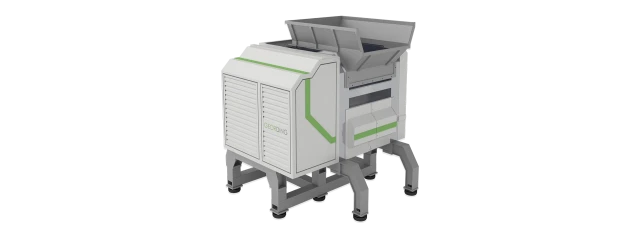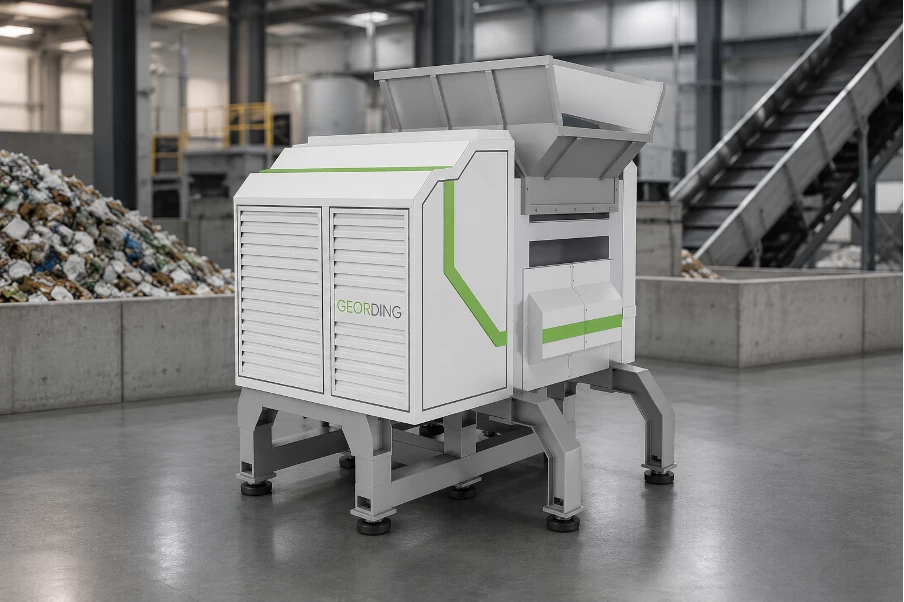
A single shaft shredder is an industrial size-reduction machine designed to process bulky plastic waste, wood, rubber, textile scraps, and industrial waste into smaller, more manageable pieces. In recycling lines, it is often installed before washing, drying, separation, or pelletizing, helping the material move more smoothly into the next stage.
For recycling plants, the key issue is not only machine power. What matters more is whether the shredder can match the material condition, required output size, production capacity, and downstream equipment. When oversized or irregular waste is properly reduced before further processing, the whole line becomes easier to feed, control, and maintain.
What is a single shaft shredder?
This type of shredder uses one rotating shaft with cutting knives to reduce waste material into smaller pieces. During operation, a hydraulic or electric ram pushes the material toward the rotor, allowing the knives to cut and tear the material based on the required output size.
It is often selected for materials that are too bulky, loose, or irregular to be fed directly into downstream recycling equipment. Typical examples include plastic lumps, film rolls, woven bags, wood pallets, rubber blocks, and mixed industrial waste.
Compared with a granulator, which is usually used for smaller and more controlled materials, this machine is commonly used as the first step in size reduction. Its role is to prepare difficult materials for conveying, washing, drying, separation, or pelletizing.
For buyers who need more detailed machine information, Geording also provides a dedicated Single Shaft Shredder product page for further reference.
Where a single shaft shredder fits in a recycling line
In many recycling operations, shredding is the first process that affects the stability of the entire line. When material enters the system in oversized or inconsistent shapes, problems may appear later in feeding, washing, drying, or extrusion.
Plastic film rolls and bulky production waste are good examples. Without proper size reduction, these materials may not move smoothly through conveyors or washing systems. After shredding, the material becomes easier to handle and can enter the next stage with fewer interruptions.
Depending on the project design, shredded material may be conveyed to a plastic washing and drying system, a granulator, a separation system, or a plastic recycling pelletizing machine. For this reason, shredding should not be evaluated as a standalone process. It needs to be planned together with the complete recycling line.
For buyers comparing different recycling line layouts, Geording’s plastic recycling machine solutions provide a broader view of how shredding, washing, drying, and pelletizing equipment can be connected in one system.
Materials commonly processed by single shaft shredders
Different waste streams require different shredding conditions. Material size, density, hardness, shape, and contamination level all affect machine configuration.
Common applications include:
- Plastic lumps, purgings, pipes, sheets, containers, film rolls, woven bags, and production waste
- Wood pallets, boards, furniture waste, and wood offcuts
- Rubber sheets, rubber blocks, used tires, and industrial rubber scraps
- Textile waste, fabric scraps, fibers, and nonwoven materials
- Municipal waste, industrial waste, agricultural waste, and combustible waste for SRF/RDF preparation
In plastic recycling, shredding usually takes place before washing, drying, extrusion, or pelletizing. For wood waste, the shredded output may be used for biomass fuel, mulch, wood chips, or further recycling. In rubber and tire recycling, reduced material can be used in road construction, playground surfaces, molded rubber products, or additional processing.
Because each material behaves differently during cutting and feeding, the rotor design, blade configuration, screen size, and feeding method should be selected according to actual production conditions.
How machine design affects shredding efficiency
Shredding efficiency is not determined by motor power alone. In actual operation, stable performance depends on how the transmission system, rotor, blades, feeding method, and maintenance design work together.
Key design factors include:
-
Torque and cutting system
A single shaft shredder usually relies on strong torque and controlled cutting to process bulky or irregular materials. This helps the machine handle plastic lumps, film rolls, rubber scraps, wood waste, and mixed industrial waste more steadily. -
Adjustable operating settings
Depending on the material and required output size, operators may adjust rotor speed, feeding pressure, torque response, or screen size. This flexibility helps improve processing stability and energy efficiency. -
Controlled material feeding
A hydraulic or electric ram pushes material into the cutting chamber in a controlled way. This reduces the risk of bridging, uneven feeding, sudden overload, and unnecessary downtime. -
Durability and maintenance access
Since shredders often process abrasive or contaminated waste, blade material, machine structure, screen access, and cutting chamber design all affect long-term maintenance cost. Easier blade replacement and cleaning help keep the line running more consistently. -
SRF/RDF waste preparation
For municipal waste, industrial waste, agricultural waste, and combustible materials, adjustable shredding performance helps produce a more consistent output size and supports better material mixing before the next processing stage.
Why shredding quality affects the entire plastic recycling line
For plastic recycling lines, front-end shredding has a direct impact on the stability of the following processes. If the input material is too large or uneven, the washing line may not clean it efficiently, the drying system may not remove moisture evenly, and the pelletizing process may experience unstable feeding.
Reducing the material before it enters the next stage lowers the risk of blockages and makes the entire line easier to control. This is especially important when handling bulky plastics, soft films, woven bags, or mixed production waste.
For projects planned by Geording Machinery, shredding is usually evaluated together with washing, drying, and pelletizing instead of being treated as an isolated process. After size reduction, the material can be sent to a plastic washing and drying system to remove dirt, labels, sand, moisture, or other contaminants.
When the material is suitable for pelletizing, the cleaned and dried flakes can then be processed by a 3-in-1 recycling and pelletizing machine or other pelletizing systems to produce reusable plastic pellets.
This connection between shredding and downstream processing is important because every stage affects the next. A stable front-end process improves material flow and supports better recycling efficiency throughout the line.
What to check before choosing a single shaft shredder
The first point to confirm is the material itself. A machine used for plastic film will not be configured the same way as one used for wood pallets, rubber blocks, or mixed industrial waste. Material shape, bulk density, hardness, and contamination level all affect rotor design, blade selection, motor power, and feeding method.
When evaluating a shredder, buyers should pay attention to several practical factors:
- Material type and input size
- Required shredded output size
- Target processing capacity
- Feeding method and material bulk density
- Contamination level and wear condition
- Downstream equipment, such as washing, drying, granulation, or pelletizing systems
- Maintenance access for blades, screens, and the cutting chamber
Output size is especially important. If the material will go into a washing line, drying system, granulator, or pelletizing machine, the screen size and cutting setup need to be selected accordingly. A smaller output size may help certain applications, but it may also reduce throughput or increase energy consumption.
Processing capacity should also be based on real operating conditions. Buyers need to consider the feeding method, daily operating hours, downstream line capacity, and whether the material is clean or contaminated. If this front-end equipment cannot keep up with the rest of the line, it may become a bottleneck. If it is oversized, the investment may be higher than necessary.
Maintenance is another important part of selection. Since shredding equipment works under heavy load, the design should allow practical access for blade inspection, blade replacement, screen cleaning, and cutting chamber maintenance. Easier maintenance helps reduce downtime and supports stable long-term operation.
Shredder vs. Granulator: understanding their roles in recycling lines
Shredders and granulators both reduce material size, but they are usually used at different stages of a recycling line. A shredder is mainly used for primary size reduction, especially when the material is bulky, irregular, loose, or difficult to feed. A granulator is usually used later when the material needs to be reduced into smaller and more uniform flakes or granules.
| Item | Shredder | Granulator |
|---|---|---|
| Main role | Primary size reduction | Secondary size reduction |
| Suitable material condition | Bulky, irregular, loose, or difficult-to-feed materials | Pre-cut or smaller materials that need uniform particle size |
| Output purpose | Makes material easier to convey, wash, dry, or further process | Produces smaller and more uniform flakes or granules |
| Typical position in line | Before washing, drying, separation, or granulation | After shredding or before washing, drying, or pelletizing |
| Selection focus | Feeding stability, torque, rotor design, blade strength | Cutting precision, screen size, particle uniformity, throughput |
In many plastic recycling lines, both machines may be used together. The shredder handles the first stage of size reduction, while the granulator further prepares the material for washing, drying, or pelletizing. Whether both are needed depends on the material condition, required output size, and final recycling process.
How shredding connects with washing, drying, and pelletizing
For recycling projects, shredding should be planned according to the whole system layout. The goal is not only to cut material into smaller pieces, but to make sure the material can move smoothly into the next process.
Geording Machinery provides single shaft shredders for plastic recycling, industrial waste processing, SRF/RDF preparation, and general size reduction applications. Depending on the customer’s material, capacity requirement, and recycling goal, the machine can be supplied as a standalone unit or integrated into a complete recycling line.
For plastic recycling projects, Geording can evaluate how the front-end shredding process should connect with conveyors, washing equipment, drying systems, filtration units, extrusion systems, and pelletizing machines. This system-based planning helps reduce feeding issues and supports more stable recycled pellet production.
If you are processing plastic waste, wood, rubber, textile waste, mixed industrial waste, or SRF/RDF materials, the most suitable configuration should be reviewed based on actual production conditions.
To learn more, visit the Geording Single Shaft Shredder product page, explore Geording’s plastic recycling machine solutions, or contact our team to discuss your recycling project requirements.
FAQ
Q1 What is a single shaft shredder used for?
It is used to reduce the size of bulky or irregular waste materials before further processing. Common applications include plastic recycling, wood waste processing, rubber recycling, textile waste recycling, industrial waste treatment, and SRF/RDF preparation.
Q2 Is a single shaft shredder suitable for plastic recycling?
Yes. In plastic recycling lines, it is commonly used to process plastic lumps, film rolls, woven bags, containers, pipes, sheets, and production waste. By reducing material size first, the line can achieve more stable feeding for washing, drying, extrusion, and pelletizing.
Q3 What is the difference between a single shaft shredder and a granulator?
A shredder is mainly used for primary size reduction of bulky or difficult-to-feed materials. A granulator is usually used for secondary size reduction when smaller and more uniform flakes or granules are required.
Q4 Can a single shaft shredder be integrated into a complete plastic recycling line?
Yes. It can be used as the front-end size reduction unit in a complete plastic recycling line. After shredding, the material can be conveyed to washing, drying, separation, extrusion, or pelletizing systems depending on the process design.
Q5 How do I choose the right single shaft shredder configuration?
The right configuration depends on material type, input size, output size, processing capacity, contamination level, feeding method, maintenance requirements, and downstream equipment. For complete recycling projects, selection should be based on the whole system, not only the shredder itself.