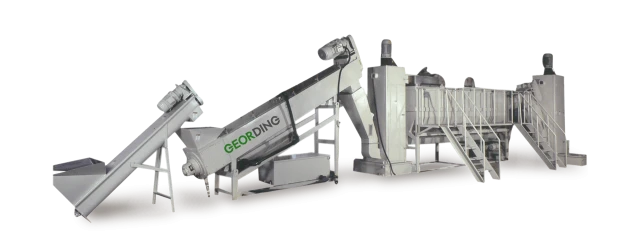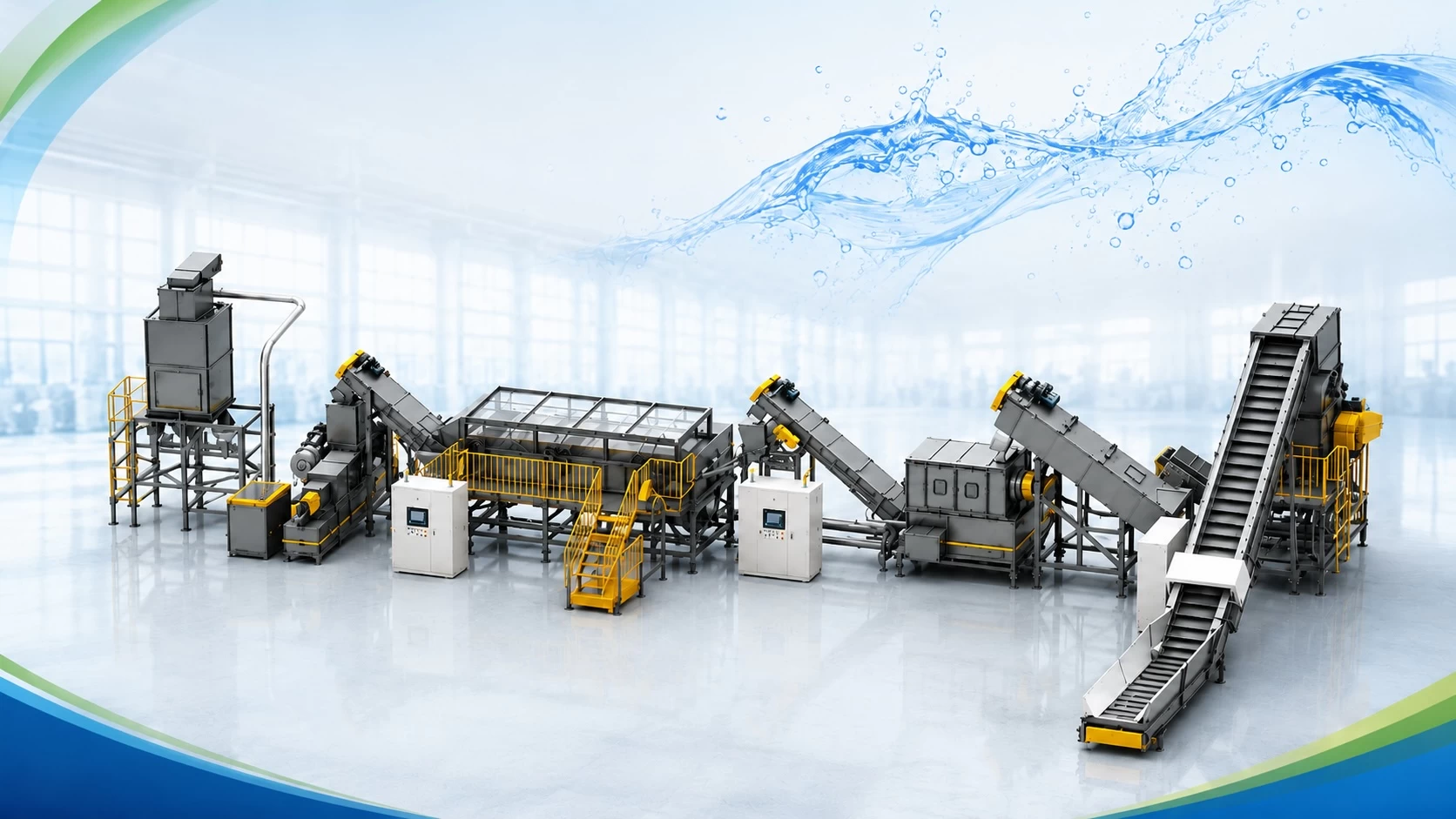
In plastic recycling, washing is a key process that determines the quality of the regranulated material. Used film, PP woven bags, PET bottles, and other plastic scrap often carry dust, mud, oil residue, labels, sand, and other contaminants.
If these contaminants are not adequately removed before reprocessing, it can lead to problems during extrusion, lower pellet quality, and reduced production efficiency. To turn waste plastic into a stable, reusable resource, it is important to select a plastic washing line suited to the actual condition of the raw material.
GEORDING offers Washing Lines that cover crushing, washing, dewatering, drying, extrusion, and pelletizing for waste plastic, and can design washing line configurations to match a wide range of material conditions.
What Is a Plastic Washing Line
A plastic washing line is an integrated equipment system that uses water to remove contaminants from the surface of plastic raw material. It is mainly used in waste plastic recycling to clean crushed plastic flakes, film, bag-type material, and bottles.
A washing line typically combines a crusher, washing tank, dewatering machine, dryer, and conveying equipment.
By designing the system as a complete washing line, waste plastic can be processed continuously from crushing through washing, dewatering, and drying, producing material in a condition suitable for the downstream extrusion and pelletizing stages.
Why Washing Waste Plastic Matters
Collected waste plastic is not always in a condition suitable for reprocessing. Film used outdoors, agricultural materials, industrial packaging, PP woven bags, and jumbo bags, in particular, often carry mud, sand, moisture, oil, and other contaminants.
Insufficient washing of waste plastic can lead to issues such as:
- Color inconsistency or black specks in regranulated pellets
- Clogging or abnormal wear inside the extruder
- More frequent screen changes
- Inconsistent pellet quality
- Risk of production line stoppages
- Lower resale value of the regranulated material
In other words, washing waste plastic is not simply about getting the material clean. It is an important pretreatment step that affects pellet quality, equipment uptime, and overall production efficiency.
Basic Stages of a Plastic Washing Line
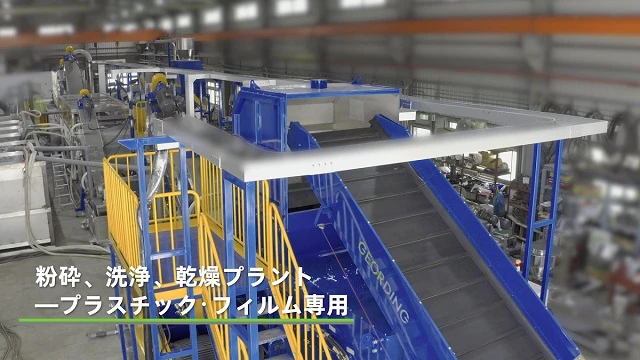
Watch the video: Crushing, Washing And Drying Whole Plant Facility For Plastic Film
A plastic recycling washing line combines multiple pieces of equipment based on material type and contamination level. The main stages include feeding, crushing, washing, dewatering, drying, and connecting to extrusion and pelletizing.
Feeding and Conveying
First, collected waste plastic is fed into the system via a feeding device or conveyor for the next stage. Feeding and conveying methods vary depending on the raw material's shape, such as film, PP bags, PET bottles, or rigid plastics.
If a material tends to be bulky, prone to tangling, or likely to jam, a feeding design that ensures stable supply is needed. Unstable feeding affects the processing capacity of the entire washing line.
Crushing
Before washing, waste plastic is crushed or shredded to an appropriate size. Reducing the material's size allows water flow and friction to reach the material more evenly, making it easier to remove surface contaminants.
For film or bag-type material, crushing design needs to account for the tendency to tangle and moisture content. For rigid plastics or PET bottles, throughput, particle size consistency, and handling of foreign objects matter more.
GEORDING offers configurations such as the Crushing, Washing And Drying Whole Plant Facility For Plastic Film or the Crushing, Washing And Drying Whole Plant Facility For Plastic Scrap, depending on material conditions.
Washing
Washing uses water to remove dust, mud, oil residue, labels, sand, and other contaminants from the plastic surface. Depending on how dirty the material is, this stage may combine washing tanks, friction washers, high-speed washers, and density, or float-sink, separation.
For heavily contaminated waste plastic in particular, simple rinsing often is not enough. Friction between materials, water flow, and density differences need to be used effectively to remove contaminants and foreign objects.
Dewatering
After washing, plastic material retains a significant amount of moisture, which is removed using a dewatering machine.
A dewatering machine removes excess moisture from washed plastic flakes or film, preparing the material for the drying or extrusion stages. Insufficient dewatering can lead to steam generation during extrusion, poor quality, and reduced production efficiency.
Film-type material in particular tends to retain moisture, making post-wash dewatering especially important for stabilizing pellet quality. GEORDING's related equipment includes the Single Screw Squeezing Drying Machine and the Horizontal Centrifugal Dryer.
Drying
After dewatering, a drying stage is applied as needed. Drying further reduces residual moisture, bringing the material to a moisture level suitable for extrusion and pelletizing.
Feeding insufficiently dried material into the extruder can cause bubbling, surface defects, and inconsistent pellet quality. For this reason, a plastic washing line combines washing, dewatering, and drying to produce material that is ready for downstream processing.
Connecting to Extrusion and Pelletizing
Once washed, dewatered, and dried, plastic material is fed into an extruder or pelletizer to be processed into regranulated pellets.
Producing consistent pellets depends not only on the extruder and pelletizer, but also on the quality of the upstream washing line. Washing reduces contaminants and foreign objects, while dewatering and drying properly lower moisture content. Together, these stages improve extrusion stability and pellet quality.
GEORDING's Washing Line
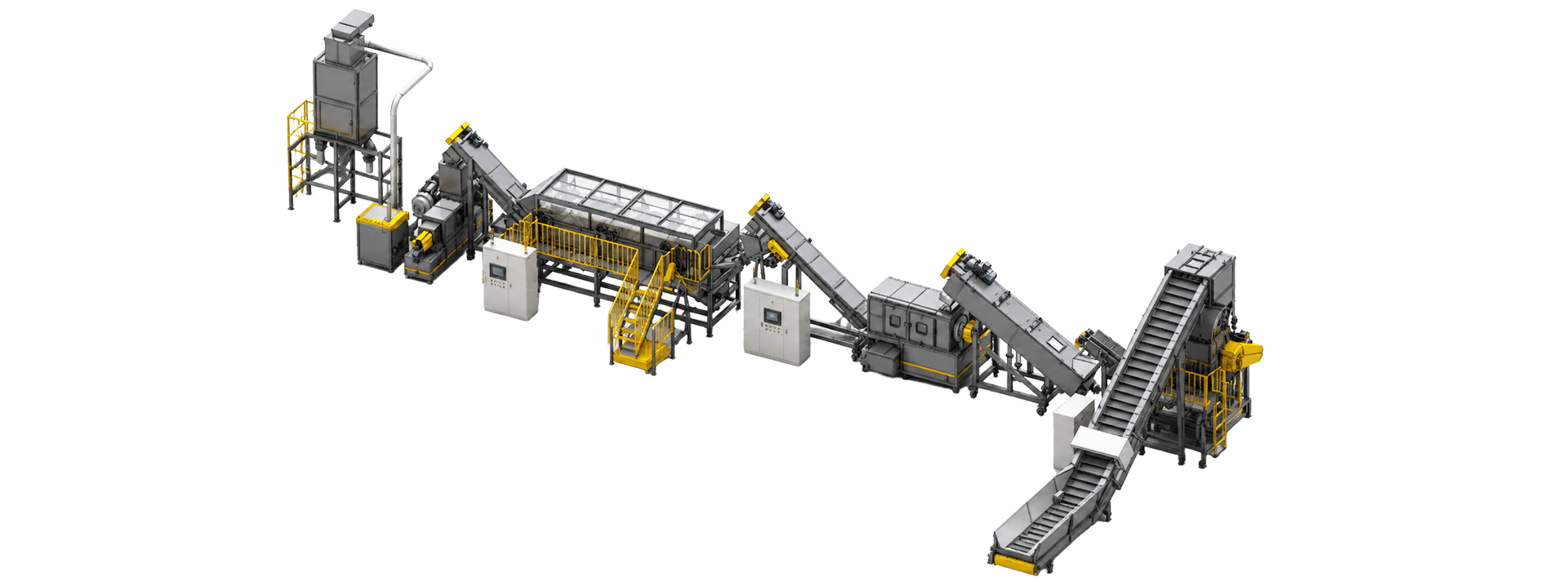
GEORDING offers Washing Lines designed for the pretreatment needs of waste plastic. A washing line uses water to remove dust, oil residue, and mud from the surface of plastic raw material, preparing it for reprocessing.
GEORDING's washing lines can handle a wide range of contaminated plastic materials, including used film, PP woven bags, PET bottles, and plastic scrap. Depending on material type and contamination level, crushing, washing, dewatering, and drying equipment are combined to produce material suited for downstream extrusion and pelletizing.
Key related equipment includes the Crushing, Washing And Drying Whole Plant Facility For Plastic Film, the Crushing, Washing And Drying Whole Plant Facility For Plastic Scrap, the Single Screw Squeezing Drying Machine, and the Horizontal Centrifugal Dryer.
Combining this equipment based on material conditions and throughput helps improve washing quality, dewatering efficiency, and overall line stability in plastic recycling.
Materials a Washing Line Can Handle
A plastic washing line can handle a wide variety of waste plastic materials.
Typical materials include used film, PP woven bags, PE film, HDPE material, PET bottles, jumbo bags, plastic scrap, agricultural film, packaging waste, and in-house plastic trim and offcuts.
That said, the required equipment configuration varies by material type. Film-type material places more weight on dewatering efficiency; PET bottles require effective removal of labels and foreign objects; PP bags and jumbo bags need a line design that accounts for washability, dewatering, and drying after crushing.
What to Look for When Choosing a Plastic Washing Line
When investing in waste plastic washing equipment, it is important to look beyond the performance of individual machines and evaluate the design of the entire line.
Can it handle your material type?
PP, PE, HDPE, PET, film, bags, and rigid plastics each require different equipment configurations. It is important to choose a manufacturer that can design crushing, washing, dewatering, and drying stages suited to your specific raw material.
Can it handle your contamination type?
Dust, mud, oil, sand, labels, and foreign objects require different washing approaches. For heavily contaminated waste plastic in particular, both washing effectiveness and maintainability need to be considered.
Is dewatering and drying performance sufficient?
How much moisture can be removed after washing has a major impact on downstream stability. For pellet production in particular, dewatering performance is a key evaluation point.
Is the whole line stable?
A plastic washing line runs multiple pieces of equipment continuously, so overall line balance matters as much as individual machine performance. If feeding, crushing, washing, dewatering, drying, and conveying are not properly designed together, production efficiency can suffer.
Can it be customized?
Waste plastic conditions vary widely depending on the factory or collection source. Beyond standard equipment, the ability to customize for material conditions, installation space, production capacity, and downstream requirements is important.
GEORDING Washing Line Case Studies
GEORDING's washing lines have been installed at recycling facilities around the world. Line designs covering crushing, washing, dewatering, drying, and pelletizing are tailored to material type, contamination level, production capacity, and the challenges of existing equipment.
Southeast Asia: Washing Line Upgrade for a Major Recycling Plant
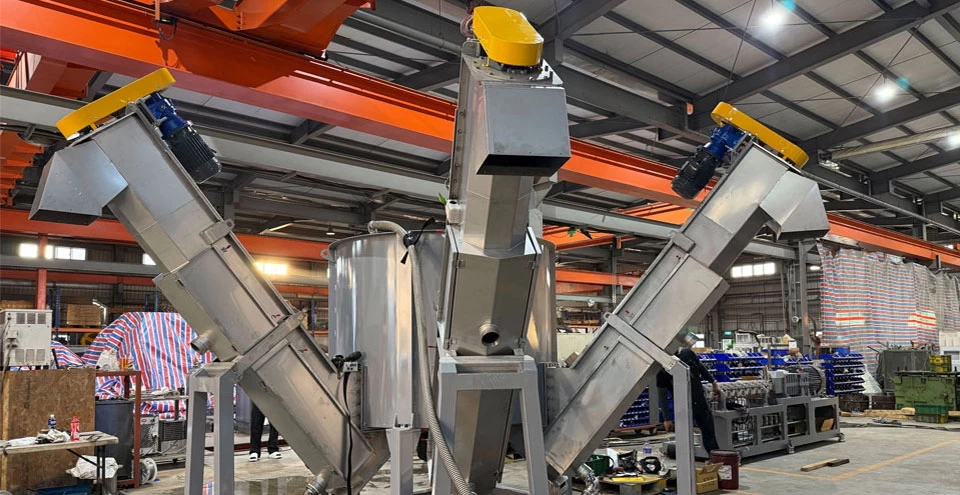
A major plastic recycling company in Southeast Asia found that its existing washing equipment fell short of target washing performance and processing efficiency, leading to lower pellet quality, delivery delays, and disrupted production schedules.
GEORDING conducted an on-site survey and plant diagnosis to identify the bottlenecks across the line, then redesigned equipment layout and workflow while making use of the existing equipment. As a result, the washing line returned to stable operation, and pellet cleanliness and consistency improved significantly. Read more in the Southeast Asia washing line upgrade case study.
Qatar: Plastic Washing Line Installation

A company in Qatar installed a GEORDING washing line to reprocess plastic waste. Through crushing, washing, density separation, dewatering, and squeezing, contaminated plastic waste is purified and prepared for the pelletizing stage.
This case shows that a washing line is more than just a way to clean waste plastic. It plays a critical pretreatment role in improving pellet quality. Read more in the Qatar washing line case study.
Costa Rica: Washing & 3-in-1 System Installation
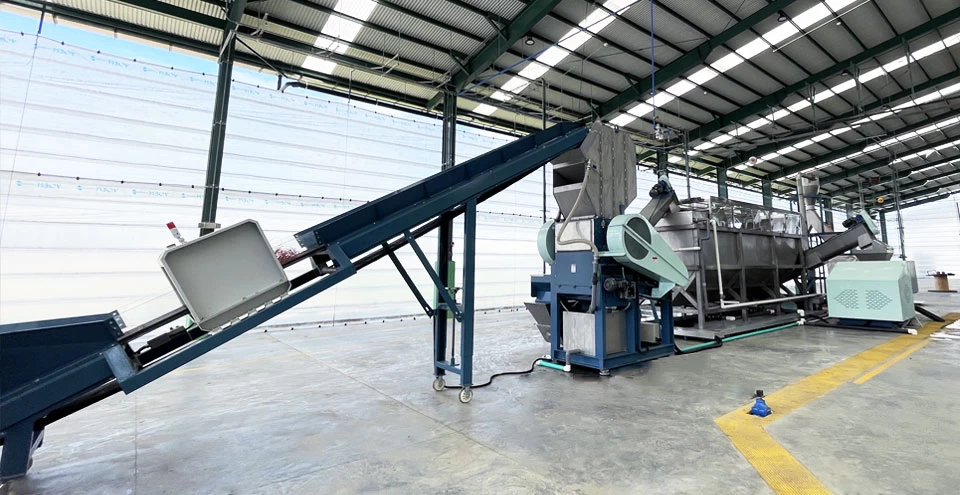
A leading fruit trading group in Costa Rica installed GEORDING's crushing, washing, and drying equipment along with a GD-150TS-3IN1 pelletizing system to process waste PE film, PE cushioning material, and PP packing straps generated during fruit production.
Film and foam packaging materials are among the most difficult to dry and reprocess. GEORDING combines washing, drying, and pelletizing equipment tailored to material characteristics, helping improve recycling efficiency and stabilize reprocessing quality. Read more in the Costa Rica washing & 3-in-1 case study.
How Washing Affects Regranulated Pellet Quality
Pellet quality is not determined by the extruder or pelletizer alone. The quality of the upstream washing, dewatering, and drying stages plays a major role.
When washing is done properly, it reduces contaminants and foreign objects in the material and helps prevent issues during extrusion. Properly removing moisture also improves pellet appearance and consistency.
On the other hand, if washing or dewatering is inadequate, final pellet quality can become unstable, limiting the range of applications. For this reason, choosing the right washing line and dewatering equipment is essential to improving pellet quality.
Summary
A plastic washing line is an essential piece of equipment for turning waste plastic into a usable resource. Collected waste plastic often contains dust, mud, oil, foreign objects, and moisture, and failing to remove these properly can negatively affect both pellet quality and production efficiency.
For this reason, plastic recycling should be approached as a continuous flow: crushing, washing, dewatering, drying, extrusion, and pelletizing, with equipment selected to match the raw material.
GEORDING supports the reprocessing of film, PP, PE, HDPE, PET bottles, and various plastic scrap through its Washing Line, which includes equipment such as the Crushing, Washing And Drying Whole Plant Facility For Plastic Film, the Crushing, Washing And Drying Whole Plant Facility For Plastic Scrap, the Single Screw Squeezing Drying Machine, and the Horizontal Centrifugal Dryer.
If you are considering a plastic washing line, or pretreatment equipment ahead of pellet production, get in touch with GEORDING. We will help design a recycling line suited to your material conditions, production capacity, installation space, and downstream requirements.
FAQ
Q1: What is a plastic washing line?
A plastic washing line is an equipment system that uses water to remove dust, mud, oil, and other contaminants from waste plastic. It is primarily used in plastic recycling as pretreatment equipment ahead of reprocessing.
Q2: Why is washing waste plastic necessary?
Waste plastic often carries contaminants, moisture, and foreign objects at the point of collection. Reprocessing without washing can cause issues during extrusion or reduce pellet quality, which is why washing is a necessary step.
Q3: What does a dewatering machine do?
A dewatering machine removes excess moisture from plastic material after washing. Dewatering improves drying efficiency and increases stability during extrusion and pelletizing. GEORDING offers related equipment such as the Single Screw Squeezing Drying Machine and the Horizontal Centrifugal Dryer.
Q4: What materials can a plastic washing line process?
A washing line can handle a wide range of waste plastic materials, including used film, PP woven bags, PE film, HDPE material, PET bottles, jumbo bags, plastic scrap, and agricultural film. That said, the required equipment configuration varies depending on the material's condition. Film-type material, for example, requires a line designed around its specific characteristics, such as the Crushing, Washing And Drying Whole Plant Facility For Plastic Film.
Q5: What should I look for when choosing a plastic washing line?
Key factors include material type, contamination level, processing capacity, dewatering and drying performance, compatibility with downstream processes, installation space, and customization capability. For pellet production in particular, the entire line, from washing through dewatering and drying, needs to be designed as a whole.
Q6: Should a washing line and a pelletizing system be considered separately?
While they are separate pieces of equipment, achieving consistent pellet quality requires treating the washing line and pelletizing system as part of one continuous process. The quality of washing, dewatering, and drying directly affects downstream extrusion and pelletizing, so equipment should be selected with the overall line balance in mind.