- In today's recycling environment, "reliability" is a word every equipment supplier uses — but few machines consistently deliver it when material conditions are at their worst. Processors handling plastic films, bulky post-consumer waste, or mixed demolition debris know the operational reality: unplanned rotor jams, inconsistent output sizes, and maintenance cycles that erode both margins and production schedules.
At the center of a well-engineered recycling line is the single shaft shredder. Not every machine marketed as a single shaft shredder, however, is built to perform under the conditions your facility actually operates in. This guide provides a technical breakdown of how single shaft shredders work, what distinguishes high-performance systems from standard alternatives, and what to evaluate when selecting equipment for demanding material streams. For a broader view of how shredding technology fits into today's recycling industry, see our overview of waste recycling equipment trends.
What Is a Single Shaft Shredder?
A single shaft shredder is a low-speed, high-torque size reduction machine engineered to process plastic films, rigid plastics, bulky waste, and mixed materials into uniform output particles. It operates using a single rotating shaft mounted with cutting blades, which shear material against a fixed set of counter-knives. An interchangeable bottom screen controls the output particle size, ensuring consistent feedstock for downstream processes such as washing lines or granulators.
Unlike high-speed impact crushers, a single shaft shredder applies controlled shear force rather than impact energy. This fundamental difference makes it the preferred choice for flexible and film-type plastics — materials that would otherwise wrap, jam, or produce inconsistent output in conventional crushing equipment.
The core components of a single shaft shredder include:
-
Rotor with cutting blades
delivers the primary shear force; blade geometry and arrangement determine both cutting efficiency and resistance to material winding -
Counter-knives (bed knives)
fixed cutting edges that work in conjunction with rotor blades to achieve clean shear cuts -
Hydraulic ram / pusher system
compresses material into the cutting chamber for stable, continuous feeding -
Bottom screen
defines output particle size; interchangeable to match downstream processing requirements -
Drive system (motor + gearbox)
provides the torque needed for consistent performance under heavy or mixed material loads
In production terms, this operating principle has three direct consequences: lower heat generation prevents film melting, controlled torque delivery reduces rotor overload risk, and screen-controlled output removes dependence on operator skill or material consistency.
These design principles are the baseline against which every supplier’s specifications should be measured.
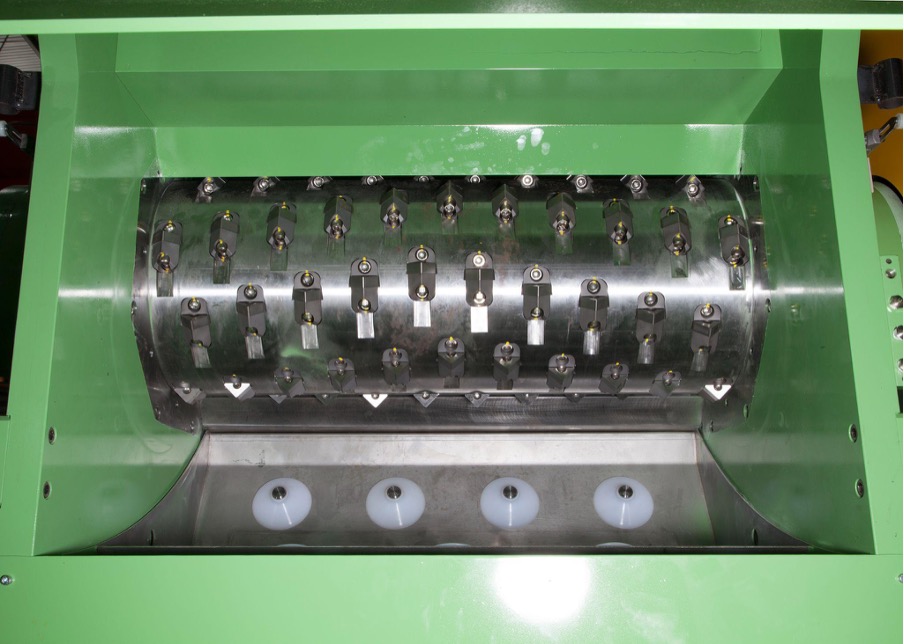
(Internal view of the single shaft rotor chamber. The arrangement of cutting blades against fixed counter-knives delivers controlled shear force across the full rotor width.)
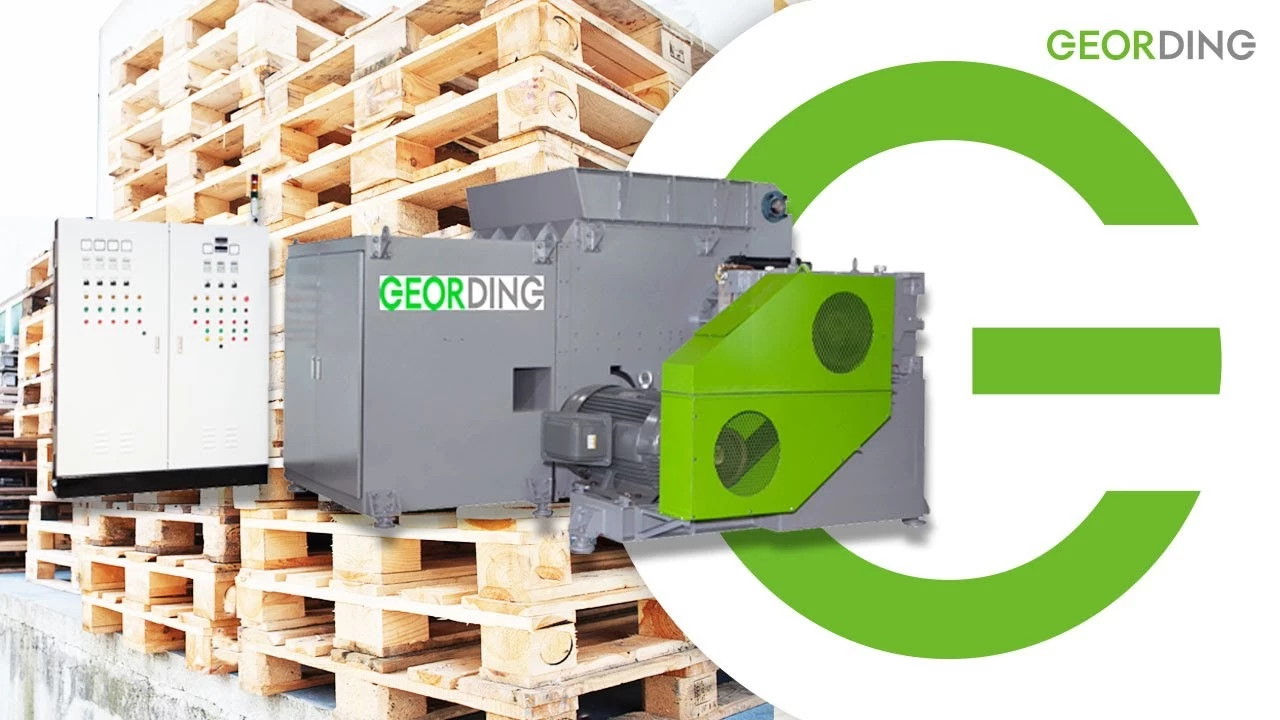
Single Shaft Shredder Key Features: Anti-Winding Rotor & Hydraulic Feeding
Anti-Winding Rotor Design: How It Prevents Film Wrapping
Film and fibrous materials are notorious for wrapping around shafts. Advanced rotor designs address this through:
- Optimized rotor diameter and cutting angle
- Tight blade-to-counter-knife clearance
- Smart blade arrangement to reduce film wrapping
These design elements work together to prevent film from finding a continuous surface to grip — the primary mechanical reason wrapping occurs in conventional rotor designs. By controlling the angle at which material contacts the blade and minimizing the gap between cutting edges, the rotor continuously breaks the wrap cycle before it can build tension. The practical result is uninterrupted operation during film-heavy runs, which directly translates to fewer manual interventions, lower labor cost per ton, and more predictable throughput planning.
Hydraulic Ram Feeding System: Preventing Jams & Ensuring Consistent Output
Material feeding instability is one of the primary causes of jamming — and one of the most preventable. A professional single shaft shredder integrates:
- Hydraulic ram system
- Automatic load-sensing control
- Overload protection
The hydraulic ram does more than push material forward — it actively compresses irregular, bulky, or mixed loads into a consistent density before they reach the rotor. This eliminates the air pockets and material bridges that cause sudden overloads.
When the load-sensing control detects rising rotor resistance, it automatically slows the feed rate rather than allowing the rotor to stall. The result: a system that self-regulates under variable material conditions, maintaining consistent output without operator intervention.
Shredder Blade Design: Material Selection & Replacement Cost Considerations
Blade longevity directly affects operational cost — and blade design choices compound over time in ways that are easy to underestimate at the point of purchase. Premium systems feature:
- Multi-edge replaceable blades
- Heat-treated alloy steel
- Modular design for easier maintenance
Heat treatment is the variable most buyers overlook when comparing blade specifications. Two blades made from nominally similar alloy steel can have dramatically different service lives depending on the heat treatment process applied — a difference that becomes significant over thousands of operating hours. Multi-edge reversible blades extend this further by allowing operators to rotate to a fresh cutting edge before a full blade replacement is needed, reducing per-ton consumable cost without compromising cut quality. Modular mounting systems reduce changeout time from hours to minutes, which matters most in high-volume operations where blade maintenance windows are narrow.
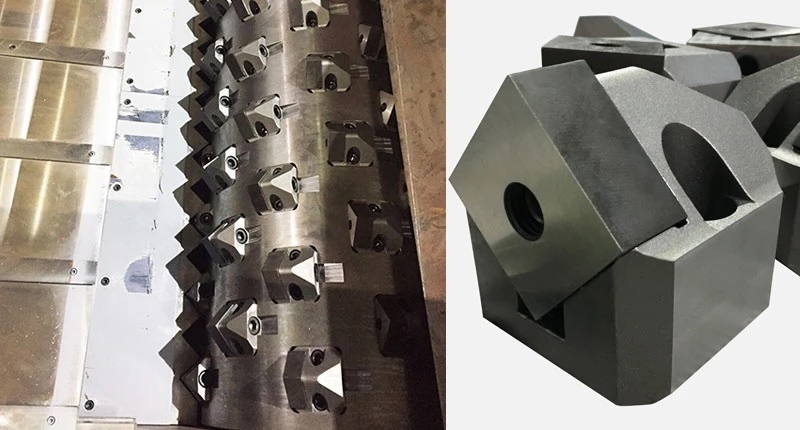
(Close-up of the multi-edge alloy steel cutting blades. Blade geometry and arrangement are critical to anti-winding performance in film recycling applications.)
Single Shaft Shredder Applications: Film Recycling, Hard Plastics & Construction Waste
Film Recycling
- Stretch film
- Agricultural film
- PE/PP flexible plastics
- Packaging waste
Film materials present a unique mechanical challenge: their low rigidity and high tensile strength mean they resist cutting and actively seek surfaces to wrap around. A single shaft shredder addresses this through the combination of low-speed shear cutting and anti-winding rotor geometry — two design characteristics that high-speed crushers fundamentally cannot replicate. For recycling lines feeding a washing station, consistent pre-shredded film size is also critical to washing efficiency; oversized or irregularly shredded film blocks spray nozzles and reduces cleaning effectiveness downstream.
Hard Plastics
- HDPE pallets
- Plastic drums and chemical containers
- Injection-molded waste
- Pipes and fittings
Rigid plastics are dimensionally unpredictable — a single load may contain thin-walled packaging alongside thick-walled pipes or solid-molded blocks. Without screen-controlled output, this variability produces inconsistent particle sizes that cause feed jams in downstream granulators and reduce pellet quality at the extruder. The interchangeable bottom screen on a single shaft shredder enforces a maximum output size regardless of input variation, giving granulator operators a consistent, predictable feedstock even when incoming material composition changes batch to batch. For operations focused specifically on HDPE processing, see our guide on HDPE recycling machines and downstream equipment requirements.
Construction & Bulky Waste
Construction and demolition waste is among the most mechanically demanding material streams a shredder can face. Beyond the plastics, foam, and tarpaulins, the real challenge is the contamination: soil, stones, and embedded metal fragments that accelerate blade wear, stress the gearbox, and cause unpredictable load spikes that standard machines are not built to absorb continuously.
Processing this stream reliably requires three things that standard shredders rarely deliver together: sufficient rotor torque to handle sudden load variation without stalling, blade metallurgy specified for abrasive contact rather than clean plastic cutting, and a drivetrain — particularly the gearbox — engineered to a safety factor that accounts for sustained heavy-load operation rather than intermittent use. When all three are correctly specified, a single shaft shredder can process mixed construction waste in a single continuous pass, eliminating the batch-feeding workarounds that reduce effective throughput and increase operator labor.
Single Shaft Shredder vs. Double Shaft Shredder: Which Is Right for Your Operation?
Both machine types reduce material size, but they serve different roles in the recycling line. Understanding how they differ in output control, material suitability, and downstream compatibility is essential to selecting the right configuration for your operation.
| Feature | Single Shaft Shredder | Double Shaft Shredder |
|---|---|---|
| Particle Size Control | ✔ Screen-controlled | ✘No screen |
| Output Uniformity | High precision | Irregular |
| Best For | Fine shredding, plastic recycling | Pre-shredding bulky waste |
| Maintenance | Lower if anti-winding optimized | Moderate |
| Film Processing | Excellent | Limited |
| Downstream Integration | Ideal for washing lines | Often requires secondary shredder |
For operations that require even stricter particle size control across complex, mixed feedstocks, a four-shaft shredder adds a third tier to this comparison — combining primary reduction and screen-controlled recirculation in a single pass.
Why Is the Single Shaft Shredder Becoming the Preferred Choice?
- Higher output size precision
- Reduced need for secondary crushing
- Better integration into automated recycling lines
- Lower lifetime operating cost
For processors considering full production line automation, see our technical overview of advanced plastic recycling production lines and how single shaft shredders function as the first-stage reduction unit in integrated systems.
Geording GD Series: Available Models & Specifications
The GD Series is Geording’s purpose-engineered line of single shaft shredders, designed to address the full range of plastic recycling and waste processing requirements — from light film streams to heavy-contamination construction waste. Geording’s GD Series single shaft shredders are available in six standard configurations, covering input openings from 608mm to 1,788mm and motor outputs from 10HP to 355HP. For most plastic film recycling operations, the GD-W1030 to GD-W1500 range represents the most common fit — balancing throughput capacity with rotor specifications suited for continuous film and mixed-waste processing. For high-volume construction waste streams with heavy contamination, the GD-W1000 at 175HP–355HP provides the torque margin needed for sustained heavy-load operation.
All models can be manufactured to custom specifications. Contact our engineering team to discuss configurations outside standard parameters or material-specific rotor and blade requirements.
| Model | Motor Output | Input Size |
|---|---|---|
| GD-W600 | 10HP~15HP | 600mm×600mm |
| GD-W800 | 20HP~40HP | 830mm×880mm |
| GD-W1000 | 40HP~75HP | 1030mm×1080mm |
| GD-W1200 | 50HP~100HP | 1230mm×1280mm |
| GD-W1500 | 75HP~150HP | 1530mm×1580mm |
| GD-W1800 | 175HP~350HP | 1780mm×1580mm |
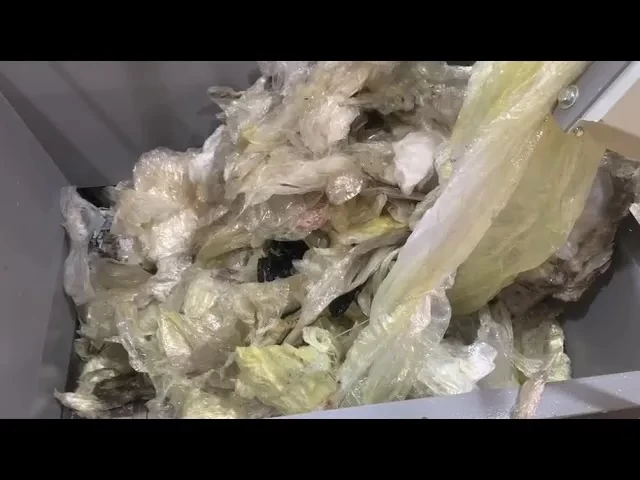
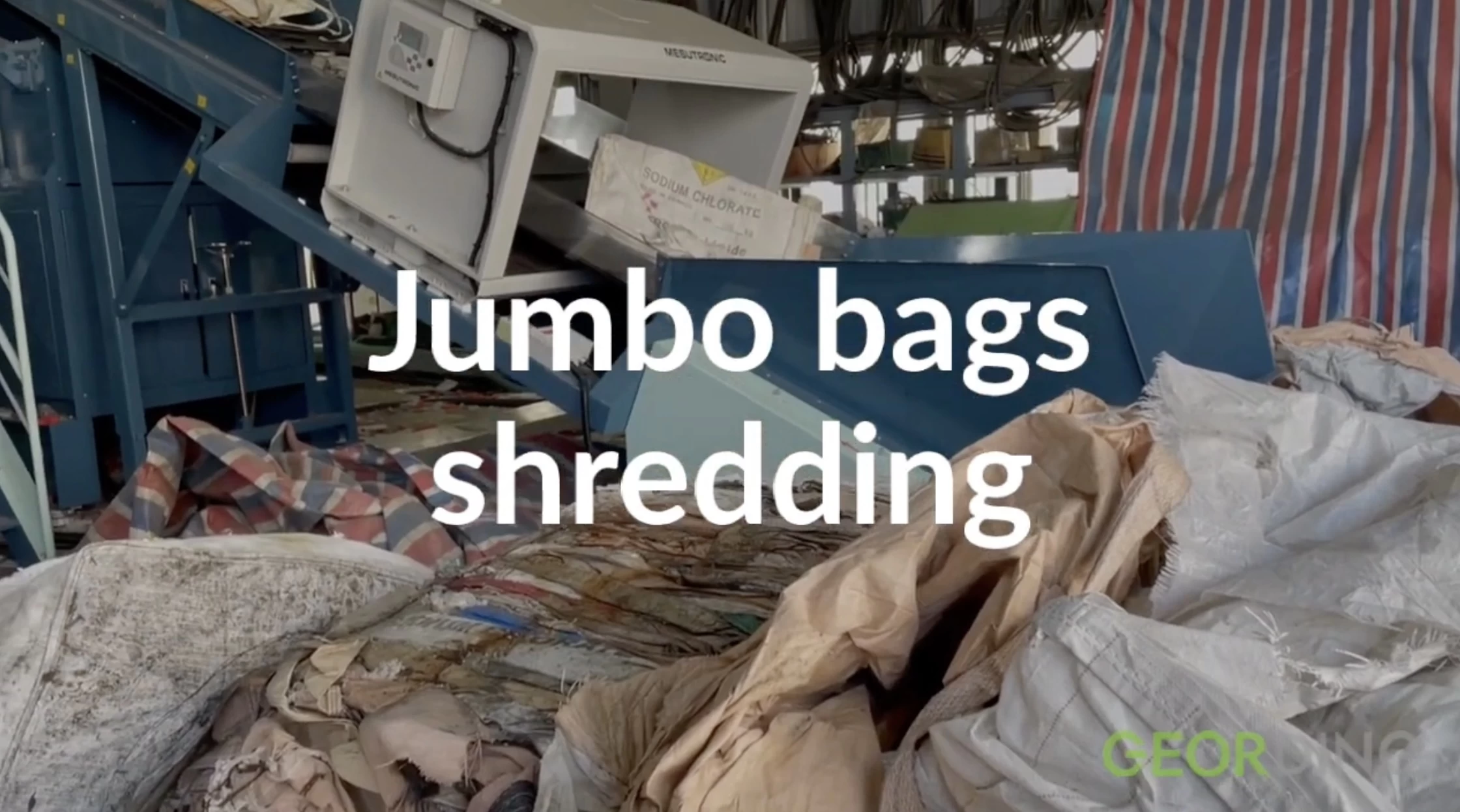
Case Study: How a Construction Waste Processor Eliminated Downtime with a Custom Single Shaft Shredder
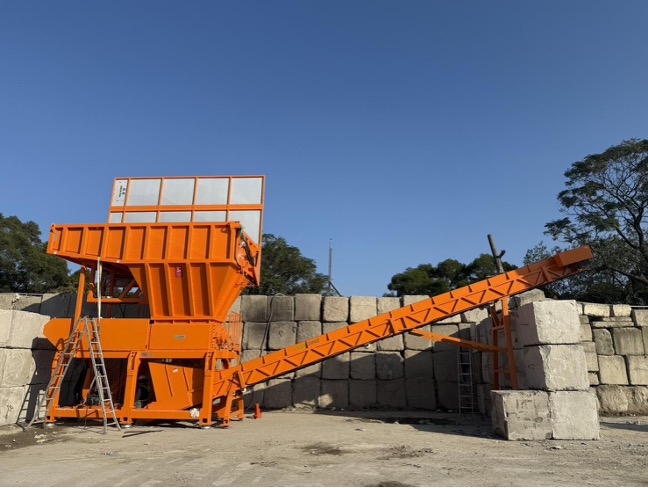
A representative example of operational transformation comes from a major construction waste processor in New Taipei City.
The company faced an extremely challenging waste stream: soil and stones mixed with demolition plastics, discarded furniture, appliance packaging bags, foam cushioning materials, tarpaulins, partial wood, rubber, and other bulky materials. The sheer volume was overwhelming.
Previous equipment from multiple brands consistently failed due to:
- Poor material feeding
- Oversized discharge
- Complete machine jams immediately after loading
Production had to be done in batches, creating significant inefficiencies. Maintenance teams were overwhelmed with constant downtime and repairs.
Geording addressed this challenge with a comprehensive engineering solution. The company developed customized blades using a higher-cost heat treatment process that most manufacturers would avoid due to expense. Additionally, Geording upgraded the system with an Italian-manufactured gearbox featuring a higher-than-standard safety factor. The entire shredder was built to ultra-high specifications, prioritizing durability over cost-cutting.
The operational impact was immediate and measurable. Materials that previously required batch feeding could now be processed in one continuous feed — eliminating the production bottleneck that had constrained throughput for years. Output particle size met specification in a single stage, removing the need for secondary processing. Processing capacity increased by approximately 40%, and chronic downtime was eliminated entirely. This outcome was the result of Geording’s engineering-first approach: rather than supplying a standard machine, the team developed customized blade technology using a higher-cost heat treatment process, paired with a reinforced Italian-manufactured gearbox specified to a higher-than-standard safety factor — a combination that addressed both the metallurgical and mechanical demands of the material stream directly.
Frequently Asked Questions About Single Shaft Shredders
Q1: What is a single shaft shredder used for?
A single shaft shredder is primarily used to reduce plastic films, rigid plastics, bulky waste, and mixed materials into uniform particles for downstream recycling processes. Common applications include PE and PP stretch film, agricultural film, HDPE pallets, plastic drums, construction demolition waste, and foam packaging. In recycling operations, it typically serves as the first stage of size reduction before washing lines, granulators, or pelletizing systems.
Q2: What is the difference between a single shaft shredder and a double shaft shredder?
The key difference lies in output control and material suitability. A single shaft shredder uses a bottom screen to regulate output particle size, making it ideal for applications that require consistent feedstock for downstream equipment. A double shaft shredder operates without a screen, producing irregular output sizes better suited for pre-shredding large, bulky waste before a secondary machine.
For plastic film recycling and washing line integration, single shaft shredders are generally the preferred choice due to their output precision and anti-winding rotor designs. Double shaft shredders are more commonly used as a first-pass reduction stage for oversized or heavily contaminated bulk materials.
Q3: What causes a shredder to jam, and how is it prevented?
Shredder jams are most commonly caused by three factors: material bridging in the feed hopper, rotor overload from inconsistent feeding, and film or fibrous material wrapping around the shaft.
A well-engineered single shaft shredder addresses these through:
-
Hydraulic ram feeding system
actively compresses material into the cutting chamber at a controlled rate, preventing bridging -
Automatic load-sensing control
detects rotor resistance and adjusts feeding speed to avoid overload -
Anti-winding rotor geometry
optimized blade angle and tight counter-knife clearance reduce the tendency of film materials to wrap
In high-contamination environments such as construction waste processing, rotor and gearbox specifications also play a critical role in jam prevention under sustained heavy loads.
Q4: How do I choose the right screen size for my recycling line?
Screen selection depends primarily on the input requirements of your downstream equipment. As a general guideline:
-
Washing lines
typically require output in the range of 50–100mm to ensure effective cleaning without blocking conveying systems -
Granulators
perform best with pre-shredded input of 30–60mm, depending on granulator rotor diameter -
Direct pelletizing lines
may require finer output of 20–40mm
Beyond downstream requirements, screen size also affects throughput — larger screens increase capacity but reduce output uniformity. For mixed or contaminated material streams, consulting with your equipment supplier on screen sizing relative to your specific material composition is strongly recommended. For operations processing PET bottles alongside other rigid plastics, our article on PET bottle recycling covers screen and downstream equipment considerations specific to that material.
Q5: How do I choose the right blade for PE film shredding?
For PE film applications, blade selection involves three key decisions:
-
Steel grade and heat treatment
High-toughness alloy steel with specialized heat treatment delivers significantly longer service life in film applications compared to standard tool steel. This is particularly important in high-volume operations where frequent blade changes create costly downtime. -
Blade geometry
A blade profile optimized for shear cutting — rather than impact — reduces heat generation and minimizes film melting during processing. -
Anti-winding configuration
Blade arrangement on the rotor should be staggered to prevent film accumulation. This is a rotor-level design decision, not just a blade selection decision.
For processors running continuous film recycling operations, customized blade configurations typically outperform off-the-shelf options in both output quality and operational cost over time.
Q6: How often do shredder blades need to be replaced, and how can I extend blade life?
Blade replacement intervals vary significantly depending on material type, contamination level, and blade metallurgy. For clean plastic film, well-specified blades may last several months under continuous operation. For construction waste or heavily contaminated streams, intervals can be considerably shorter without proper material and heat treatment specifications.
To extend blade service life:
-
Match blade steel grade to your material stream
abrasive or contaminated materials require higher-hardness alloys
-
Maintain tight blade-to-counter-knife clearance
worn clearance accelerates blade degradation and reduces cut quality
-
Monitor rotor load regularly
consistent overloading accelerates edge wear -
Use modular blade designs
multi-edge reversible blades allow partial replacement rather than full rotor changeouts, reducing per-unit consumable costs
When evaluating shredder suppliers, ask specifically about blade replacement intervals under your material conditions — this single factor often has the largest impact on long-term operating cost.
How to Choose the Right Single Shaft Shredder: Key Specifications for Recycling Operations
As recycling operations face increasing pressure to reduce costs and improve output quality, equipment selection has become a critical competitive decision, and the single shaft shredder category continues to grow. However, ranking alone does not determine operational success.
Across all the specifications a supplier will present, six variables have the greatest impact on long-term operational performance:
-
Anti-winding rotor design
-
Gearbox safety factor
-
Blade material and treatment process
-
Hydraulic feeding stability
-
Integration capability with washing lines
-
Manufacturer’s willingness to customize
In high-volume, high-contamination environments — especially construction waste — engineering integrity matters more than initial purchase price.
A properly engineered single shaft shredder is not simply a machine. It is a long-term productivity multiplier. If you are planning or expanding a complete recycling facility, our guide on plastic recycling lines for small and mid-size plants covers how shredders integrate into full-line configurations.
Ready to Evaluate a Single Shaft Shredder for Your Operation?
Selecting the right shredder for your material stream requires more than a specification sheet comparison. Rotor design, blade metallurgy, gearbox safety factor, and screen configuration all need to be matched to your specific processing conditions — and the wrong configuration will cost far more in downtime and maintenance than any initial price difference.
With over 30 years of engineering experience and installations across global recycling markets, Geording's technical team works directly with processors to assess material streams, identify operational bottlenecks, and recommend configurations built for long-term performance.
If you are evaluating shredding solutions for film recycling, hard plastic processing, or high-contamination construction waste, we welcome the opportunity to review your requirements. Contact us for a no-obligation technical consultation.