
How contractors on government waste tenders in Taiwan use relocatable waste shredder lines to follow the debris from site to site.
Here is the project at a glance:
- Customers: Contractors that win government waste tenders in Taiwan
- Applications: Public waste treatment plants and post-typhoon debris cleanup
- Equipment: Separator, shredders, crushers and conveyors, supplied as one line
- Supplied: 2022 to present
The Challenge: Waste Work That Moves with Every Typhoon
After a typhoon, contractors on government waste projects face huge volumes of mixed debris that has to be screened, shredded and reduced in volume fast. The harder problem is where that debris turns up. In normal months, the work sits at public waste treatment plants. After each storm, it moves to whichever region was hit, and equipment tied to a single plant cannot follow it.
The contractors in this case win these jobs through government tenders, then source the equipment from us as the manufacturer. What they needed was a line that could move as often as the work did.
The Solution: A Complete, Relocatable Waste Shredder Line
We supplied each contractor with a complete waste shredder line instead of a single machine. Mixed waste goes onto a screen first, which sorts it before shredding. Conveyors then carry it to our shredders, which cut it down in volume, and on to crushers for further size reduction. Because the screens, shredders and conveyors work as one system, a contractor can move the whole set to a new plant and start again.
We plan the screens, shredders and conveyors together, so the capacity of each stage is matched from the design stage. If something goes wrong, the contractor deals with a single point of contact. Every line also goes through integration and a full test run at our factory before it ships.
The right shredder depends on the waste. A twin shaft shredder has no screen and suits tearing large, mixed debris into smaller pieces first. A single shaft shredder uses a bottom screen to control output size, so the next stage receives material of a consistent size. Mixed debris often carries soil, stones and metal fragments that wear blades down faster. That is why blade material and heat treatment, along with the gearbox safety factor, should be matched to the waste stream. Our single shaft shredder guide explains how the two types differ. With bulky, irregular waste, the hydraulic ram on a single shaft shredder compacts the material before feeding it to the rotor. When load sensing detects rising resistance, it slows the feed automatically to prevent jams.
We build the screening stage to suit the waste. For example, we built custom equipment that sorts landfill waste by size for a leading waste management and pollution control company.

Custom screening equipment we built to sort landfill waste by size
Moving between sites is also what separates this kind of line from a track-mounted mobile shredder:
| Track-mounted mobile shredder | Relocatable shredder line | |
|---|---|---|
| How it moves | Drives around a single site on its own tracks | Moved between sites and set up at each plant |
| What you get | Usually a single machine | Screening, shredding and conveying equipment working as one line |
The Result: One Waste Shredder Line for Routine Work and Typhoon Cleanup
The same equipment that handles routine work at public plants now covers emergency cleanup after storms as well. Some contractors have since bought several sets of the line and shift them between regions as workloads change. When a typhoon hits, they move a set straight to a plant in the affected area and start clearing debris on site.
New contractors have continued to place orders since our first shipments in 2022.
Beyond Cleanup: Extending the Debris Line into SRF Pre-Treatment
The screening and shredding equipment in a debris line can be extended into a pre-treatment line for solid recovered fuel (SRF). For contractors, that gives the line a second use once the cleanup is done. Our production plant for RDF-5, a class of refuse-derived fuel (RDF), shows how a complete fuel line is set up. Our pre-treatment system for renewable energy feedstock, built around a Four-Shaft Shredder at the front end, is one example of that kind of line.
RDF and SRF both turn waste into alternative fuel. RDF is made by sorting, shredding, drying and compressing general waste. SRF goes through finer processing and has to meet stricter international fuel standards. For the companies that use it, waste they once paid to haul away becomes a substitute fuel with a stable heating value.
Our RDF-5 line handles mixed waste with heavy-duty twin shaft shredders, then removes metal, glass and stones through magnetic and air separation to improve fuel purity. The conveyor layout can also be arranged to fit the space on site.
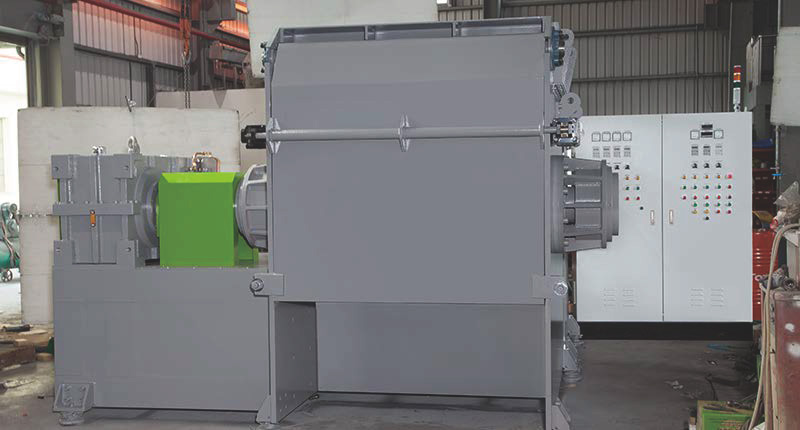
A shredder from one of our RDF-5 production plants.
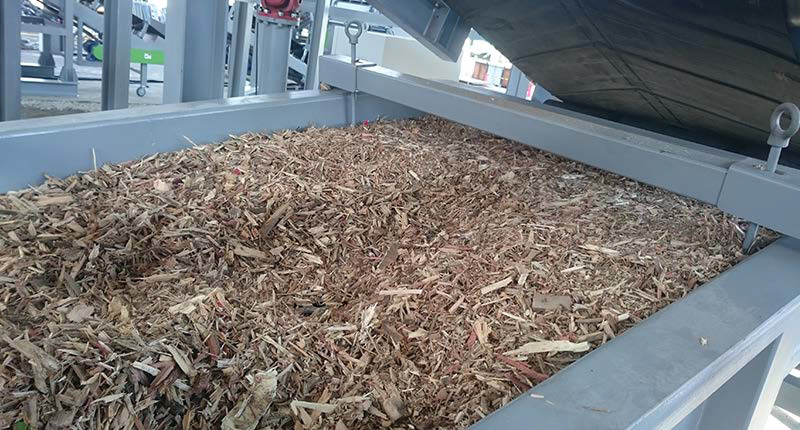
Shredded material at one of our RDF-5 production plants.
The video below shows one of our RDF-5 production lines in operation.
Related Experience: Waste and Recycling Projects in Japan
Our waste processing work extends beyond Taiwan. In Osaka, we worked with the Japanese government on an urban waste recycling demonstration plant. For a long-established Japanese recycler, our own installation team set up a turnkey recycling line covering crushing, washing and drying, so the client did not need a separate contractor for line integration.

About GEORDING
We are a Taiwanese manufacturer that has designed and built recycling and shredding equipment in our own factory since 2004. Every machine goes through a live test run before it ships, our equipment carries CE and SGS certification, and our machines have been sold to more than 29 countries. On turnkey projects, our support covers raw material analysis, process design, equipment installation and operator training. Read more in our company profile, or see what our after-sales service covers.
Plan Your Next Waste Project with Us
Many government waste tenders are handled by engineering and environmental consultants. Whether you are a consultant or a contractor, we can be your equipment partner. Tell us the types of waste you need to process, the sites involved and whether the equipment will move between them, and we will put together a configuration for your project.
Send those details through our contact form, and our team will get back to you.
Further Reading on Waste Shredders and SRF
These articles and project pages go deeper into the equipment and applications in this case: